
SE00091
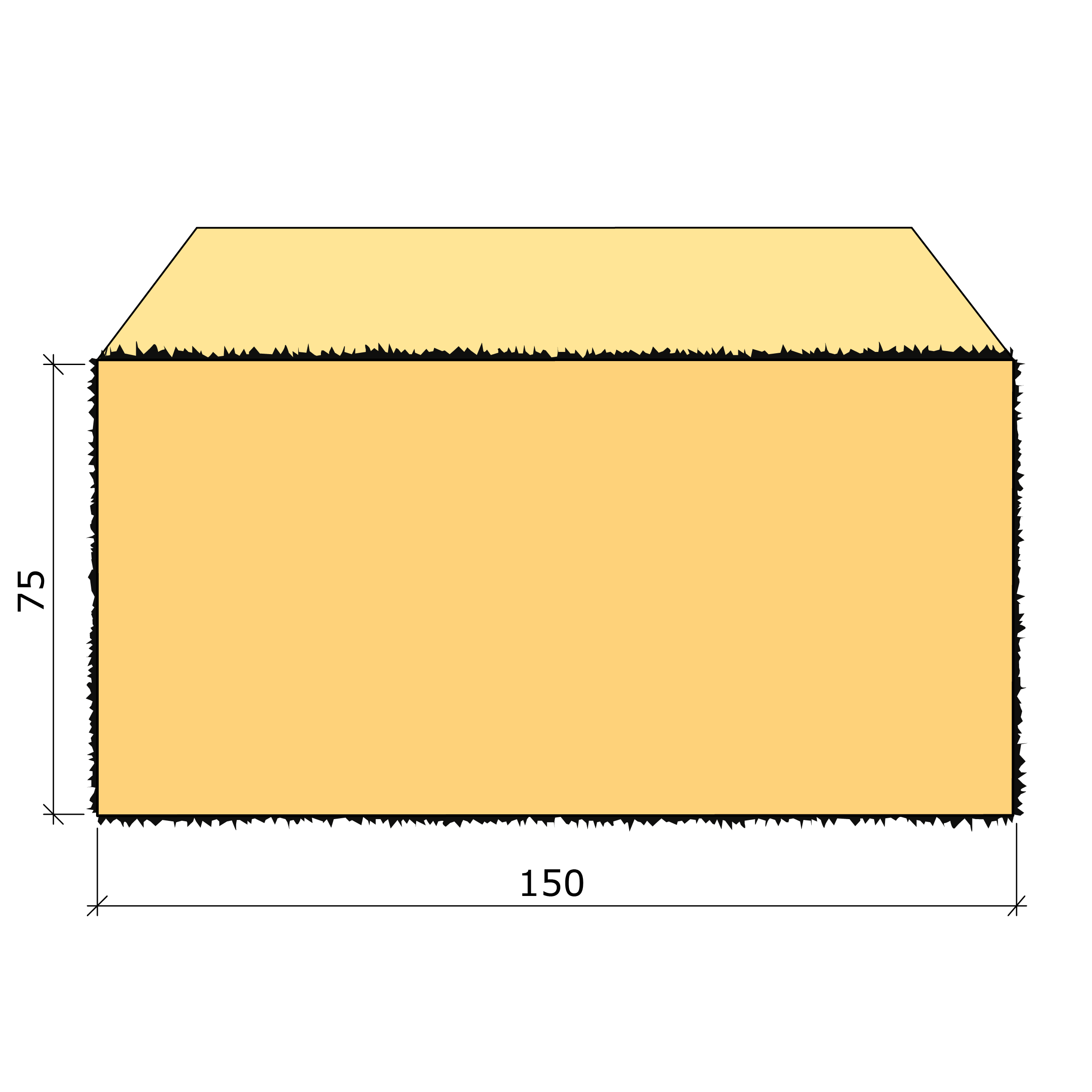
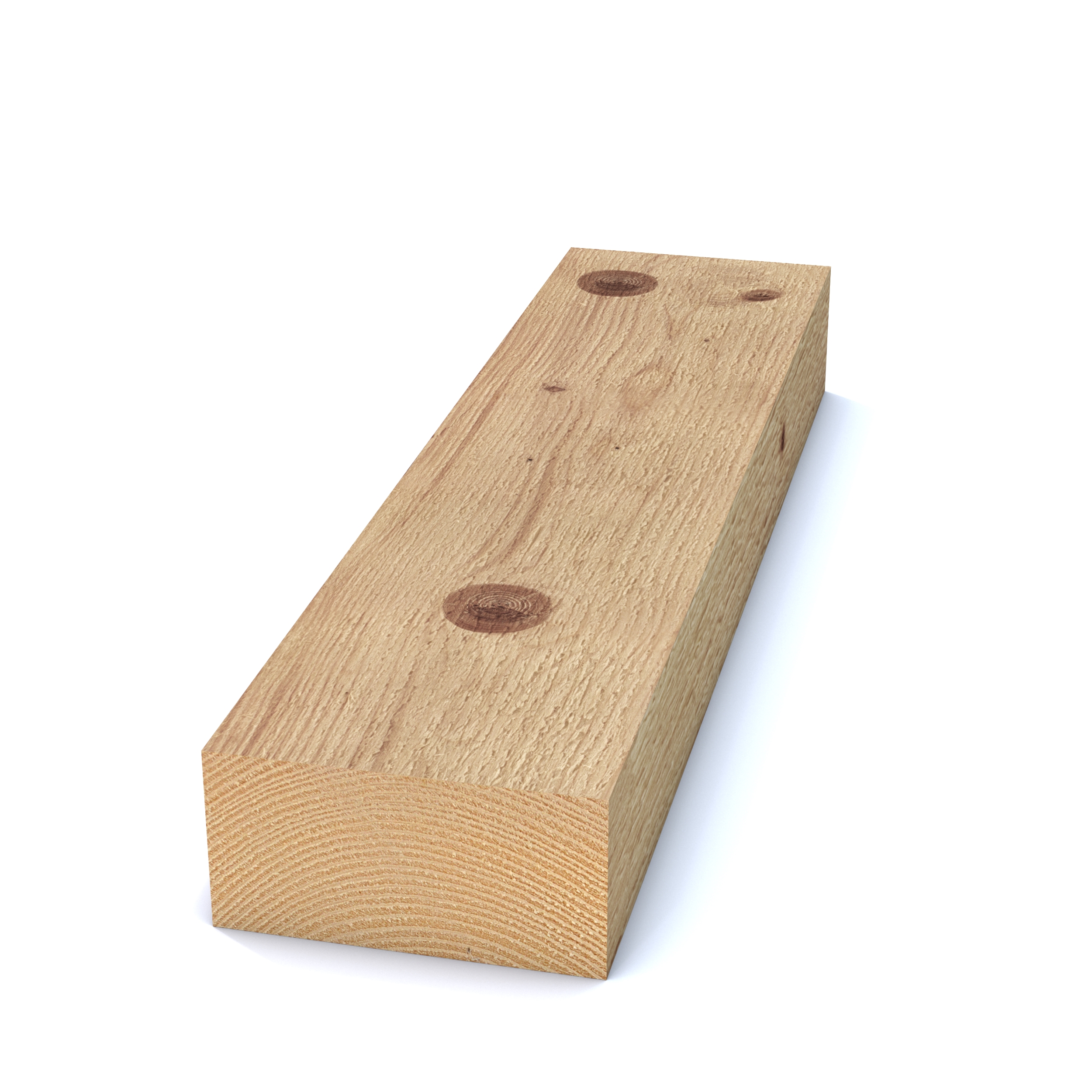
Sawn timber G4-2 (V) Spruce Untreated 75x150
Sawn timber, with different dimensions and qualities,
are pieces of wood cut from sawn timber (logs). The main sawn products, planks and boards, have a rectangular cross-section.
Properties
| Swedish Wood - ID for generic product type | SE00091 | ||
Swedish Wood - ID for generic product types, which are included in the Swedish Wood standardised product assortment. |
|||
| VilmaBas-ID | VB0590 | ||
Identity used by Swedish building material dealers |
|||
| Wood species - English name according to EN 13556 | Spruce | ||
English name for the botanical/latin name and designation in EN 13556 |
|||
| Wood species - botanical name according to EN 13556 | PCAB - Picea abies | ||
The Latin name and a 4-letter code used in Europe. |
|||
| Grading according to EN 1611-1 | G4-2 | ||
The grading can be done on all four sides, flat and edge sides = G4. Or only on the two flat sides = G2 (rarely used in Sweden). The grading designations are followed by a number that indicates the quality of the wood, 0-4 with 0 being the highest quality. |
|||
| Commercial Grading of Timber - the "Black Book" (2020) | V | ||
Trade grading of different quality classes designated by the Roman numerals I - VII.
Also presented in the name of the product type with the value in brackets, for example (V). |
|||
| Surface structure according to Swedish Wood specification | Four sawn sides. | ||
The different side and edge surface structures for a profile type can be produced to meet different technical and appearance requirements. For example, with different techniques and equipment for sawing, planing, grooving and grinding. |
|||
| Thickness according to EN 1309-1 | 75 mm | ||
Thickness measured in a direction perpendicular to the surface, in at least three places |
|||
| Width according to EN 1309-1 | 150 mm | ||
Width measured in a direction perpendicular to the longitudinal axis, in at least three positions |
|||
| Covering width, assembled, according to Swedish Wood specification | 150 mm | ||
The visible width, for example of an individual tongued or grooved board after assembly. |
|||
| Timber consumption per square meter according to Swedish Wood specification | 6,67 rm/m² | ||
For calculating the number of running meters (rm) per square meter (m²) (excluding waste). Based on the product's covering width. |
|||
| Profile area, taking into account design, according to Swedish Wood specification | 0,01125 m² | ||
Calculated on the actual profile of the wood product.
For example, the area of a tongue-and-groove profile needs to be calculated taking into account the tongue-and-groove design. |
|||
| Target moisture content according to EN 14298 | 16 % | ||
The concept of target moisture content describes the desired average moisture content when delivering a batch of wood. Read more Swedish Wood - Wood and moisture |
|||
| Handling weight per cubic meter according to Swedish Wood specification | 470 kg/m³ | ||
Estimated weight for product handling planning.
Spruce approx. 470 kg/m³. Pine approx. 500 kg/m³.
Glulam approx. 500 kg/m³. Impregnated glulam approx. 600 kg/m³ (dried lamellas after impregnation).
Impregnated wood approx. 800 kg/m³ (not dried) |
|||
| Handling weight per meter according to Swedish Wood specification | 5,29 kg/m | ||
Based on handling weight per cubic meter (kg/m³) and area of profile (m²) |
|||
| Fire classification of construction products and building elements according to EN 13501-1 | D-s2,d0 | ||
Fire classification of all construction products, including products incorporated into building elements (products are considered in relation to their end use) |
|||
| Reaction to fire without testing according to EC Decision 2003/593/EC | D-s2,d0 | ||
Specifies the classes of construction products and/or materials that meet all requirements for the performance characteristic "reaction to fire" without the need for further testing. |
|||
| Durability class for wood with regard to attack by rotting fungi according to EN 350 | DC 4 | ||
Natural resistance to biological degradation, by rotting fungi and insects, of heartwood in contact with the ground. Durability Class - DC 1 means "Very durable" and DC 5 means "Not durable". |
|||
| Dry-raw density according to Swedish Wood specification | 380 kg/m³ | ||
Dry-raw density is defined as the ratio of the mass of the dry wood sample to the volume of the moisture-swollen wood sample. The density varies from wood species to wood species and in different parts of the same tree. Average values for dry-raw density: Spruce 380 kg/m³ and Pine 420 kg/m³. |
|||
| Density at 12% moisture content according to Swedish Wood specification | 440 kg/m³ | ||
Density is the ratio between the mass of a piece of wood and its volume, at a certain moisture content. Average values ??at 12% moisture content: Spruce 440 kg/m³ and Pine 470 kg/m³. |
|||
| Tensile strength parallel to the grain direction at 12% moisture content according to the Swedish Wood specification | 90 MPa | ||
Average value and refers to small, defect-free test specimens at an average temperature of 20° C.
Note, the value should not be used when calculating load-bearing capacity and stiffness. In that case, the characteristic values specified in Eurocode 5, with the associated national annex Boverket's Code of Regulations, BFS 2022:4, EKS 12, should be used. |
|||
| Tensile strength perpendicular to the grain direction at 12% moisture content according to the Swedish Wood specification | 2,5 MPa | ||
Average value and refers to small, defect-free test specimens at an average temperature of 20° C. Please note that the value should not be used when calculating load-bearing capacity and stiffness. In that case, the characteristic values specified in Eurocode 5, with the associated national annex Boverket's Code of Regulations, BFS 2022:4, EKS 12, should be used. |
|||
| Bending strength parallel to the grain direction at 12% moisture content according to the Swedish Wood specification | 75 MPa | ||
Average value and refers to small, defect-free test specimens at an average temperature of 20° C. Please note that the value should not be used when calculating load-bearing capacity and stiffness. In that case, the characteristic values specified in Eurocode 5, with the associated national annex Boverket's Code of Regulations, BFS 2022:4, EKS 12, should be used. |
|||
| Compressive strength parallel to the grain direction at 12% moisture content according to the Swedish Wood specification | 40 MPa | ||
Average value and refers to small, defect-free test specimens at an average temperature of 20° C. Please note that the value should not be used when calculating load-bearing capacity and stiffness. In that case, the characteristic values specified in Eurocode 5, with the associated national annex Boverket's Code of Regulations, BFS 2022:4, EKS 12, should be used. |
|||
| Compressive strength perpendicular to the grain direction at 12% moisture content according to the Swedish Wood specification | 6 MPa | ||
Average value and refers to small, defect-free test specimens at an average temperature of 20° C. Please note that for calculating load-bearing capacity and stiffness, the characteristic values specified in Eurocode 5, with the associated national annex Boverket's Code of Regulations, BFS 2022:4, EKS 12, should be used. |
|||
| Shear strength parallel to the grain direction at 12% moisture content according to the Swedish Wood specification | 9 MPa | ||
Average value and refers to small, defect-free test specimens at an average temperature of 20° C. Please note that for calculating load-bearing capacity and stiffness, the characteristic values specified in Eurocode 5, with the associated national annex Boverket's Code of Regulations, BFS 2022:4, EKS 12, should be used. |
|||
| Impact strength parallel to the grain direction at 12% moisture content according to the Swedish Wood specification | 50 kJ/m² | ||
Average value and refers to small, defect-free test specimens at an average temperature of 20° C. Please note that for calculating load-bearing capacity and stiffness, the characteristic values specified in Eurocode 5, with the associated national annex Boverket's Code of Regulations, BFS 2022:4, EKS 12, should be used. |
|||
| Hardness parallel to the grain direction, according to the Brinell test method | 3,2 HB | ||
A measure of the hardness of a material. A ball is pressed against the material with a certain force. The impression is measured. calculated and reported according to a Brinell measurement scale. The value is given for wood with a moisture content of 12%. |
|||
| Hardness perpendicular to the grain direction, according to the Brinell test method | 1,2 HB | ||
A measure of the hardness of a material. A ball is pressed against the material with a certain force. The impression is measured and calculated and reported according to a Brinell measurement scale. The value is given for wood with a moisture content of 12%. |
|||
| Elasticity modulus parallel to the grain direction at 12% moisture content according to the Swedish Wood specification | 11000 MPa | ||
Average value and refers to small, defect-free test specimens at an average temperature of 20° C. Please note that for calculating load-bearing capacity and stiffness, the characteristic values specified in Eurocode 5, with the associated national annex Boverket's Code of Regulations, BFS 2022:4, EKS 12, should be used. |
|||
| Modulus of elasticity perpendicular to the grain direction at 12% moisture content according to the Swedish Wood specification | 550 MPa | ||
Average value and refers to small, defect-free test specimens at an average temperature of 20° C. Please note that for calculating load-bearing capacity and stiffness, the characteristic values specified in Eurocode 5, with the associated national annex Boverket's Code of Regulations, BFS 2022:4, EKS 12, should be used. |
|||
| Thermal conductivity parallel to the fiber direction according to EN ISO 10456 | 0,24 W/m °C | ||
Thermal conductivity is a measure of how heat is transported through a material. The thermal conductivity of wood is greater parallel to the fibers than perpendicular to the fibers. The value is given for wood with a moisture content of 12%. |
|||
| Thermal conductivity perpendicular to the grain direction according to EN ISO 10456 | 0,11 W/m °C | ||
Thermal conductivity is a measure of how heat is transported through a material. The thermal conductivity of wood is greater parallel to the fibers than perpendicular to the fibers. The value is given for wood with a moisture content of 12%. |
|||
| Heat capacity parallel to the grain direction according to EN ISO 10456 | 1650 J/kg °C | ||
Is a measure of the energy that must be supplied to a system under specified conditions for its temperature to increase by one degree. The value is given for wood with a moisture content of 12%. |
|||
| Calorific value parallel to the grain direction according to EN ISO 10456 | 16,9 MJ/kg | ||
A measure of how much energy in terms of Joules (or kilowatt hours) is developed when a certain material/fuel type is burned. The value is given for wood with a moisture content of 12%. |
|||
| Shrinkage, axial direction, in the longitudinal direction of the stem, according to Swedish Wood specification | ßa | 0,3 % | |
Average value for shrinkage of the wood species during drying, from fiber saturation (moisture content approx. 30%) to absolutely dry wood (moisture content 0%). Read more Swedish Wood - Moisture-related wood movement |
|||
| Shrinkage, radial direction across the annual rings, according to Swedish Timber specification | ßr | 3,6 % | |
Average value for shrinkage of the wood species during drying, from fiber saturation (moisture content approx. 30%) to absolutely dry wood (moisture content 0%). Read more Swedish Wood - Moisture-related wood movement |
|||
| Shrinkage, tangential direction along the annual rings, according to Swedish Wood specification | ßt | 7,8 % | |
Average value for shrinkage of the wood species during drying, from fiber saturation (moisture content approx. 30%) to absolutely dry wood (moisture content 0%). Read more Swedish Wood - Moisture-related wood movement |
|||
| Shrinkage, volume change according to Swedish Wood specification | ßv | 11,7 % | |
Average value for shrinkage of the wood species during drying, from fiber saturation (moisture content approx. 30%) to absolutely dry wood (moisture content 0%). Read more Swedish Wood - Moisture-related wood movement |
|||
| Shrinkage in percent, per percentage unit change in moisture content, according to Swedish Wood specification | 0,26 % | ||
For practical calculations of the average moisture movements of sawn timber of pine and spruce, approximately 7 percent can be used as an average value, for a board sawn in a tangential direction. This corresponds to 0.26 percent shrinkage per percentage unit change in moisture content. Read more Swedish Wood - Moisture-related wood movement |
|||
| Boverkets (The Swedish National Board of Housing, Building and Planning) Resource ID | 6000000007 | ||
Identity in Boverket's (The Swedish National Board of Housing, Building and Planning) climate database for the resource category the product belongs to. Property data for the resource category is taken from version 02.05.000, with version date January 25, 2024. Read more Boverket's climate database |
|||
| Boverket - Climate impact GWP-GHG, conservative value (A1-A3, per kg product) | 0,08 kg CO2 eq. | ||
The conservative value is used in climate declaration calculations with generic values. A1-A3 values for the building products in 'Boverket' (The Swedish National Board of Housing, Building and Planning) climate database are set conservatively. That is, approximately 25 percent higher than the average, to stimulate the use of specific climate data. Read more Boverket's climate database |
|||
| Boverket - Conversion factor | 455 kg/m³ | ||
Conversion factor which is based on the average density of dried sawn softwood lumber, with a moisture content of 16%. The factor is used when recalculating climate impact GWP-GHG in different units (kg and m³ respectively). |
|||
| Boverket - Climate impact GWP-GHG, conservative value (A1-A3, per m³ product) | 36,4 kg CO2 eq. | ||
The conservative value is used in climate declaration calculations with generic values. A1-A3 values for the building products in the Swedish National Board of Housing, Building and Planning ('Boverket') climate database are set conservatively. That is, approximately 25 percent higher than the average, to stimulate the use of specific climate data. Read more Boverket - Climate database |
|||
| Boverket - Technical lifespan | >50 years | ||
The lifespan of wood indoors is normally equal to the structure it is part of. Wood in outdoor environments normally requires maintenance during its >50 year lifespan. Read more Boverket - Climate database |
|||
| Swedish Wood - Registration number | S-P-02537 | ||
Identity for verification of the EPD with the respective program and program operator |
|||
| Swedish Wood EPD - Climate impact GWP-GHG (A1-A3, per kg product) according to SS-EN 15804 | 0,0575 kg CO2 eq. | ||
Swedish Wood EPD based generic GWP-GHG value, for sawn and planed product. Produced in a co-located sawmill and planing mill. The value can be used as a standard value, for example in design and early planning. Before choices and decisions regarding specific supplier and product have been made for the specific EPD value. |
|||
| Swedish Wood EPD - Conversion factor according to SS-EN 15804 | 489 kg/m³ | ||
For conversion between GWP-GHG per m³ and per kg, the density (kg/m³) specified in the EPD documentation for the product. |
|||
| Swedish Wood EPD - Climate impact GWP-GHG (A1-A3, per m³ product) according to SS-EN 15804 | 28,1 kg CO2 eq. | ||
GWP stands for Global Warming Potential and GHG stands for Greenhouse Gases. GHG refers to gases that let the sun's short-wave radiation through and absorb parts of the Earth's thermal radiation. The GWP-GHG value is included in the calculations for climate declarations, according to the Swedish National Board of Housing, Building and Planning's specifications. The GWP-GHG indicator includes all greenhouse gases included in the GWP-Total but excludes biogenic carbon dioxide uptake, emissions and biogenic carbon stored in the product. |
|||
| Swedish Wood - Global warming potential - total (GWP-total) (A1-A3, per m³ product) according to EN 15804 | -744 kg CO2 eq. | ||
Represents the total global warming potential, i.e. the sum of the GWP indicators: GWP-fossil, GWP-biogenic and GWP-luluc. |
|||
| Swedish Wood - Global warming potential - fossil fuels (GWP-fossil) (A1-A3, per m³ product) according to EN 15804 | 28,7 kg CO2 eq. | ||
Includes emissions of greenhouse gases (GHG) to all media resulting from the oxidation and/or reduction of fossil fuels through their conversion or degradation (for example, combustion, digestion, landfilling). |
|||
| Swedish Wood - Global warming potential - biogenic (GWP-biogenic) (A1-A3, per m³ product) according to SS-EN 15804 | -773 kg CO2 eq. | ||
Includes carbon dioxide emissions to air (CO², CO and CH4) resulting from oxidation and/or reduction of aboveground biomass through its transformation or decomposition (for example, combustion, digestion, composting, landfilling) and CO² uptake from the atmosphere through photosynthesis during biomass growth – i.e. corresponding to the carbon content in products, biofuels or aboveground plant residues such as litter and dead wood. |
|||
| Swedish Wood - Global warming potential - land use and land use change (GWP-luluc) (A1-A3, per m³ product) according to SS-EN 15804 | 0,199 kg CO2 eq. | ||
Factor describing the potential radiative forcing impact of carbon uptake and emissions (CO², CO and CH4) resulting from changes in carbon stocks caused by land use and land use change over a given period of time. |
|||
| Swedish Wood - Stratospheric ozone depletion potential (ODP) (A1-A3, per m³ product) according to SS-EN 15804. | 0,00000603 kg CFC 11 eq. | ||
The relative amount of ozone depletion caused in the stratospheric ozone layer. |
|||
| Swedish Wood - Acidification potential, accumulated exceedance (AP) (A1-A3, per m³ product) according to SS-EN 15804 | 0,247 mol H+ eq. | ||
A measure of the acidification caused by soil and water through emissions of acidifying substances into the air. |
|||
| Swedish Wood - Eutrophication potential, part of nutrients that reach freshwater disposal (EP-freshwater) (A1-A3, per m³ product) according to SS-EN 15804 | 0,0048 kg P04³¯ eq. | ||
Measures of the nutrients caused by emissions that reach and are stored in freshwater. |
|||
| Swedish Wood - Eutrophication potential, part of nutrients that reach saltwater disposal (EP-marine) (A1-A3, per m³ product) according to SS-EN 15804 | 0,0962 kg N eq. | ||
Measures of eutrophication and nutrients caused by emissions that reach and are stored in marine water (salt water). |
|||
| Swedish Wood - Eutrophication potential, terrestrial accumulated exceedance (EP-terrestrial) (A1-A3, per m³ product) according to SS-EN 15804 | 1,06 mol N eq. | ||
Measure of eutrophication caused by terrestrial emissions. |
|||
| Swedish Wood - Tropospheric ozone formation potential (POCP) (A1-A3, per m³ product) according to SS-EN 15804 | 0,295 kg NMVOC eq. | ||
Tropospheric ozone (ground-level ozone) contributes to climate change and warming. It is formed by the reaction of volatile organic compounds and nitrogen oxides, for example from emissions, and in the presence of heat and sunlight. |
|||
| Swedish Wood - Abiotic depletion potential for non-fossil resources - minerals and metals (ADP-minerals & metals) (A1-A3, per m³ product) according to SS-EN 15804 | 0,000839 kg Sb eq. | ||
Defines the decreasing availability of non-renewable resources as a result of their extraction and underlying scarcity, related to scarce elements and ores. |
|||
| Swedish Wood - Abiotic depletion potential for fossil resources (ADP-fossil) (A1-A3, per m³ product) according to SS-EN15804 | 645 MJ | ||
Defines the diminishing supply of non-renewable resources as a result of their extraction and underlying scarcity, associated with the use of fossil resources (including uranium) as fuel or raw materials. |
|||
| Swedish Wood - Water (user) deprivation potential, deprivation-weighted water consumption (WDP) (A1-A3, per m³ product) according to EN 15804 | 8,17 m³ | ||
Indicator for the impact category water use and consumption. |
|||
| Swedish Wood - Renewable primary energy resources used as energy carrier (PERE) (A1-A3, per m3 product) according to EN 15804 | 9920 MJ | ||
Examples of renewable primary energy resources are hydropower, solar power and wind power. |
|||
| Swedish Wood - Renewable primary energy resources used as raw materials (PREM) (A1-A3, per m3 product) according to EN 15804 | 6750 MJ | ||
Materials with energy content that are used as raw materials (non-recycled materials), such as wood. |
|||
| Swedish Wood - Use of renewable primary energy resources - total (PERT) (A1-3, per m3 product) according to EN 15804 | 16700 MJ | ||
The sum of renewable primary energy resources used as energy carriers (fuel) and renewable primary energy resources used as materials. |
|||
| Swedish Wood - Non-renewable primary energy resources used as an energy source (PENRE) (A1-A3, per m3 product) according to EN 15804 | 667 MJ | ||
Primary energy resources such as peat, oil, gas, coal, and uranium, which can be used as an energy source. |
|||
| Swedish Wood - Non-renewable primary energy resources used as raw materials (PENRM) (A1-A3, per m3 product) according to EN 15804 | 0 MJ | ||
Non-renewable primary energy resources used as raw materials in manufacturing. For example, oil in the manufacture of plastic-based products. |
|||
| Swedish Wood - Use of non-renewable primary energy resources-total (PENRT) (TRPE) (A1-A3, per m3 product) according to EN 15804 | 667 MJ | ||
The sum of non-renewable primary energy resources used as energy carriers (fuel) and non-renewable primary energy resources used as materials. |
|||
| Swedish Wood - Use of secondary material (SM) (A1-A3, per m3 of product) according to EN 1580 | 0 kg | ||
Use of material that is recycled (secondary) from for example previously produced products or uses, which can replace primary raw materials. |
|||
| Swedish Wood - Renewable secondary fuels (RSF) (A1-A3, per m3 product) according to EN 15804 | 0 MJ | ||
For example, pellets made from biomass residues and chipped wood waste. |
|||
| Swedish Wood - Non-renewable secondary fuels (NRSF) (A1-A3, per m3 product) according to EN 15804 | 0 MJ | ||
Non-renewable resources with energy content that are used as an energy source (fuel). |
|||
| Swedish Wood - Use of net fresh water (FW) (A1-A3, per m3 product) according to EN 15804 | 0,213 m³ | ||
Freshwater used in the production system and not returned to the same basin from which it originated. Measured using the principles of water footprint analysis according to ISO 14046. |
|||
| Swedish Wood - Hazardous waste (HW) (A1-A3, per m3 product) according to SS-EN 15804 | 0,0831 kg | ||
Hazardous waste deposited for final disposal. |
|||
| Swedish Wood - Non-hazardous waste (NHW) (A1-A3, per m3 product) according to EN 15804 | 20 kg | ||
Non-hazardous waste is non-toxic and similar to household waste. It consists of inert waste and regular household waste. |
|||
| Swedish Wood - Radioactive waste (RW) (A1-A3, per m3 product) EN 15804 | 0,00627 kg | ||
The sum, by weight, of high-, intermediate- and low-level radioactive waste conditioned for final disposal. |
|||
| Swedish Wood - Components for reuse (CR) (A1-A3, per m3 of product) according to EN15804 | 0 kg | ||
Components that are reused at the end of their life cycle. |
|||
| Swedish Wood - Materials for material recycling (MR) (A1-A3, per m3 product) according to SS-EN 15804 | 2,97 kg | ||
Materials for material recycling and use in the next product system. |
|||
| Swedish Wood - Materials for energy recovery (MER) (A1-A3, per m3 product) according to EN 15804 | 1,98 kg | ||
Materials for recycling and use as an energy source (fuel) in the next product system. |
|||
| Swedish Wood - Exported electrical energy (EEE) (A1-A3, per m3 product) according to EN 15804 | 0 MJ | ||
The amount of electrical energy available on the market after combustion. |
|||
| Swedish Wood - Exported thermal energy (ETE) (A1-A3, per m3 product) according to EN 15804 | 25,5 MJ | ||
The amount of heat energy (thermal energy) available on the market after combustion |
|||
| Swedish Wood - Biogenic carbon content in the product (per m3 product) according to EN 15804 | 211 kg C | ||
Biogenic carbon stored in the product which, when burned generates carbon dioxide. 1 kg of biogenic carbon (C) corresponds to 44/12 kg of carbon dioxide (CO²). |
|||
| Swedish Wood - Biogenic carbon content in packaging (per m3 of product) according to EN 15804 | 0 kg C | ||
Biogenic carbon stored in the packaging material which, when burned generates carbon dioxide. 1 kg of biogenic carbon (C) corresponds to 44/12 kg of carbon dioxide (CO²). |
|||
| Swedish Wood - Content of substances of very high concern (SVHC) according to REACH Candidate List | 0 % | ||
ubstances on the Candidate List have properties that may cause serious and persistent effects on human health and the environment, so-called Substances of Very High Concern (SVHC). The Candidate List is part of the EU chemicals legislation under the REACH Regulation. Read more ECHA Chemicals Database |
|||
Availability
- Swedish Wood ID: SE00091
- Valid from: 2024-01-22
Additional information
Must not be used in load-bearing construction.